Types of Hearing Loss
March 29, 2026
Hi there! Today’s post is all about hearing loss!
Stick with me — I know this topic can feel like a lot at first, but I’ll break it down step by step.
What Will Be Talked About
- The Three Types of Hearing Loss
- The Definition
- Causes
- Symptoms
- Treatments
- The Most Important Thing to Understand
- What Comes Next
The Three Types of Hearing Loss
Before we dive into each type, here is a simple way to visualize all three together:
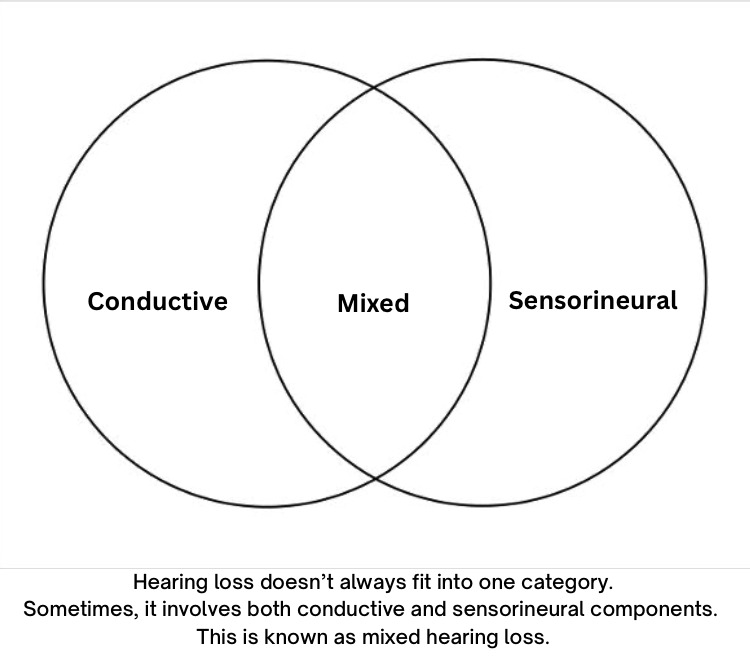
Think of these as overlapping categories rather than completely separate.
- Left side → Conductive (sound is blocked)
-
Right side → Sensorineural (sound is less clear)
- Middle → Mixed (a combination of both)
Conductive Hearing Loss
This is when something is physically blocking sound from getting through.
What It Is
This occurs when sound cannot travel efficiently through the outer or middle ear.
Common Causes
- Earwax buildup or blockages
- Ear infections or fluid in the middle ear
- Ruptured eardrum
- Problems with the middle-ear bones (e.g., otosclerosis)
- Congenital differences in ear structure
What This Feels Likes
- Sounds are muffled or quieter
- A feeling of fullness or pressure in the ear
- Trouble hearing clearly, especially in background noise
- Possible ear pain, drainage, or infections
How Is This Treated
- Removing blockages (wax, foreign objects)
- Treating infections (medication, ear drops)
- Ear tubes in some cases
- Surgery if needed
- Hearing devices when appropriate
Key Takeaway
Often treatable or reversible, depending on the cause.
Sensorineural Hearing Loss
This is when sound reaches the ear, but isn't processed as clearly.
What It Is
This happens when there is damage to the inner ear or auditory nerve. It is typically permanent.
Common Causes
- Aging (presbycusis)
- Long-term noise exposure
- Ototoxic medications
- Head trauma or sudden loud noise
- Inner ear disorders or infections
- Genetic or congenital factors
What This Feels Like
- Sounds are less clear, not just quieter
- Difficulty understanding speech, especially in noise
- People may seem like they are “mumbling”
- Tinnitus (ringing or buzzing)
- Trouble following conversations
How Is This Treated
- Hearing aids
- Cochlear implants (when appropriate)
- Assistive listening devices
- Auditory training and communication strategies
Key Takeaway
Usually permanent, but very manageable with the right support and technology.
Mixed Hearing Loss
This is where both types come together, which can make things feel more difficult.
What It Is
A combination of conductive and sensorineural hearing loss.
Common Causes
- Chronic ear infections alongside inner-ear damage
- Otosclerosis affecting multiple parts of the ear
- Trauma involving both middle and inner ear
- Congenital conditions affecting more than one part of the hearing system
What This Feels Like
- Reduced volume AND reduced clarity
- Difficulty understanding speech even when sounds are loud enough
- May include pressure, fullness, or drainage
- Tinnitus may also be present
How Is This Treated
- Addressing the conductive component (e.g., infections, fluid, blockages)
- Managing the sensorineural component (e.g., hearing aids, implants)
- Often a combination of medical and audiologic care
Key Takeaway
Requires treating both parts of the problem for the best outcome.
The Most Important Thing To Understand
If any of this sounds familiar, you are not alone. Many people experience some form of hearing loss at different points in life.
The good news is, there are many ways to understand, process and manage it.
The most important thing right now isn’t to figure everything out on your own, but to recognize that help is available.
What Comes Next
Now that you have a foundation, the next step is understanding what actually happens during a hearing appointment.
In the next post, I’ll walk you through that process step by step.
Stay Tuned for the next post! 💚
Isha :)